

Design Thinking Process Guide

Explore the steps of Design Thinking
A step-by-step guide to get more familiar with the process.
Work with a partner to get a better understand of the Design Thinking process in a fun activity. Take on the challenge of empathizing with your partner. Talk with them to see issues they face. Narrow the issue down into a problem statement and come up with solutions to address the issue. Have fun as you get familiar with Design Thinking and flex those creative brain muscles.
Want to download our guide?
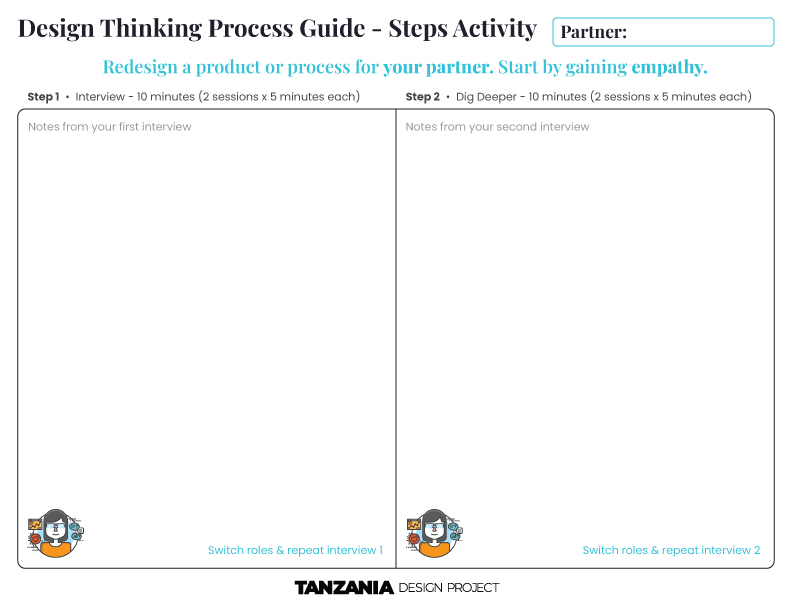
Design Thinking Process Guide - Steps Activity
Redesign a product or process for your partner. Start by gaining empathy.
Step 1: Interview - 10 minutes
(2 sessions x 5 minutes each)
- Interview your partner
- Ask about issues they face
- Take notes to help remember
- Make this a conversation
Step 2: Dig Deeper - 10 minutes
(2 sessions x 5 minutes each)
- Dig in deeper into your previous conversation
- Circle to comments made in the initial interview
- Inquire about how the feel
- Take notes for future reference
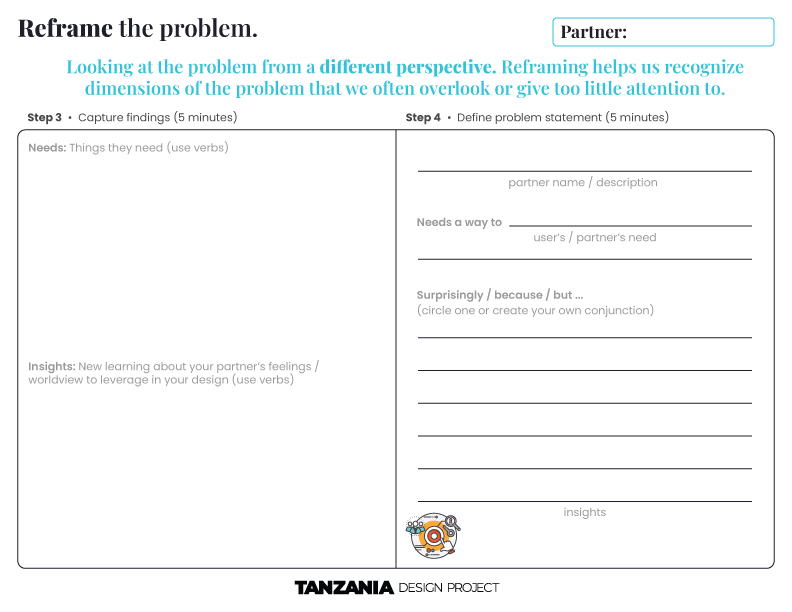
Reframe the problem.
Looking at the problem from a different perspective.
Reframing helps us recognize dimensions of the problem that we often overlook or give too little attention to.
Step 3: Capture findings
(5 minutes)
- Write down your findings
- Include things they need (use verbs)
- What are the main causes of the issue(s)?
- Is there an overarching issue at hand?
- Are there additional concerns your partner has?
- Is there something your partner is passionate about?
- Note insights: your partner’s feelings/worldview
- Use these insights to leverage in your design
Step 4: Define problem statement
(5 minutes)
Create a problem statement using the following format:
Your partner’s name needs a way to user’s / partner’s need surprisingly/because/but (use one or create your own conjunction) insights.
Example:
Victoria needs a way to better promote her business because her revenue has been flat over the last year.
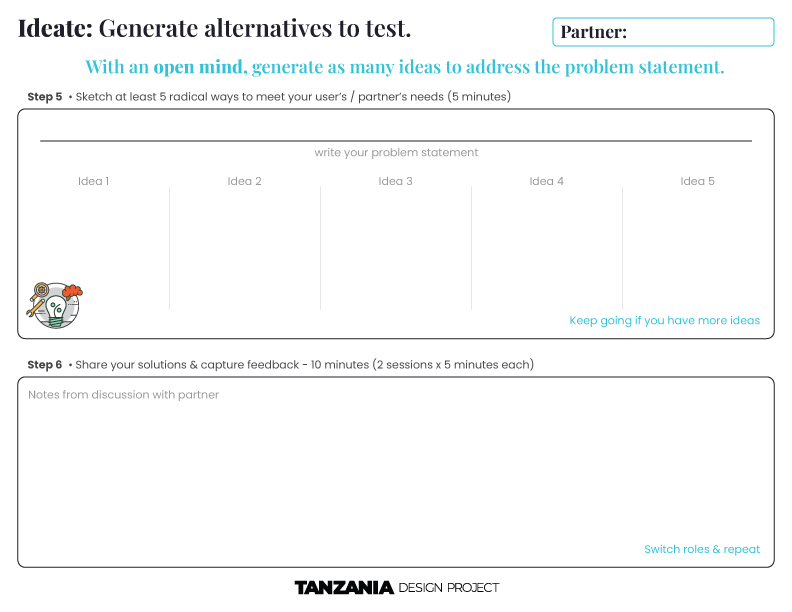
Ideate: Generate alternatives to test.
With an open mind, generate as many ideas
to address the problem statement.
Step 5: Sketch at least 5 radical ways to meet your user’s / partner’s needs (5 minutes)
- Get the creative juices flowing
- Think of ideas to address the problem statement
- Write down what comes to mind
- Stay focused on the problem statement
- There are no bad ideas
- Be open minded
Step 6: Share your solutions & capture feedback - 10 minutes (2 sessions x 5 minutes each)
- Share your ideas
- Do they have a favorite?
- What idea(s) are most feasible?
- Have a discussion with your partner
- What idea(s) are most challenging?
- Did the conversation generate more ideas?
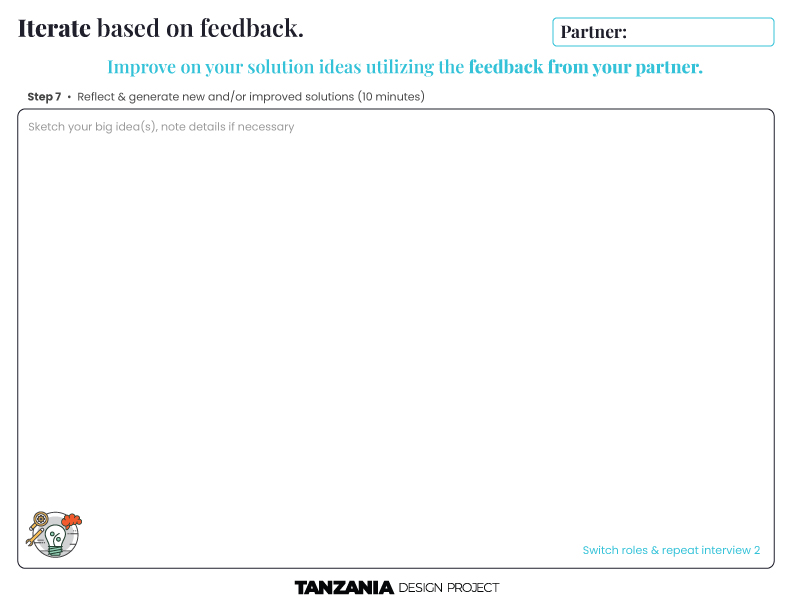
Iterate based on feedback.
Improve on your solution ideas utilizing the feedback from your partner.
Step 7: Reflect & generate new and/or improved solutions (10 minutes)
- Sketch your big idea(s)
- Note details, if necessary
- Start thinking through the details
- Are the downsides?
- What challenges might you face?
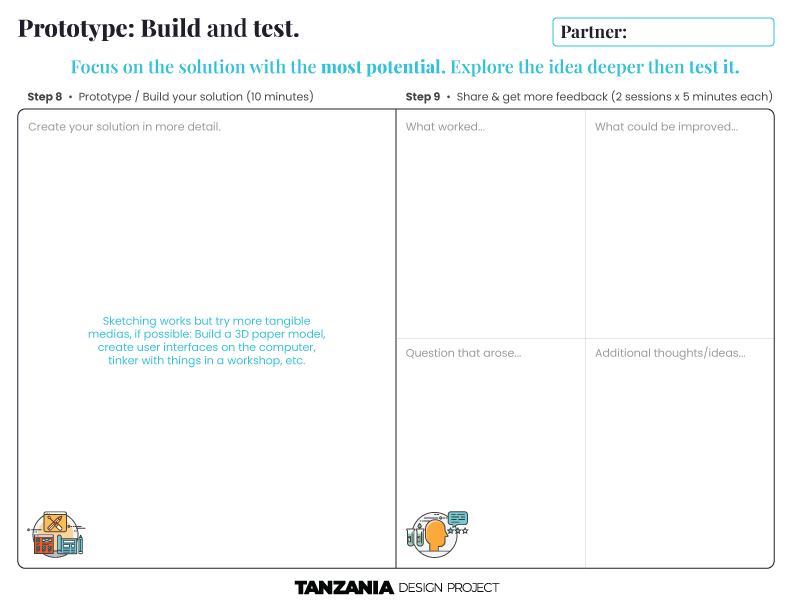
Prototype: Build and test.
Focus on the solution with the most potential.
Explore the idea deeper then test it.
Step 8: Prototype / Build your solution
(10 minutes)
Create your solution in more detail.
Sketching works but try more tangible medias, if possible. Build a 3D paper model, create user interfaces on a computer, tinker with things in a workshop, etc.
Step 9: Share & get more feedback
(2 sessions x 5 minutes each)
Take notes with the follow prompts:
- What worked…
- What could be improved…
- Questions that arose…
- Additional thoughts/ideas…